Services | Towill

Making a Point with Millions of Points

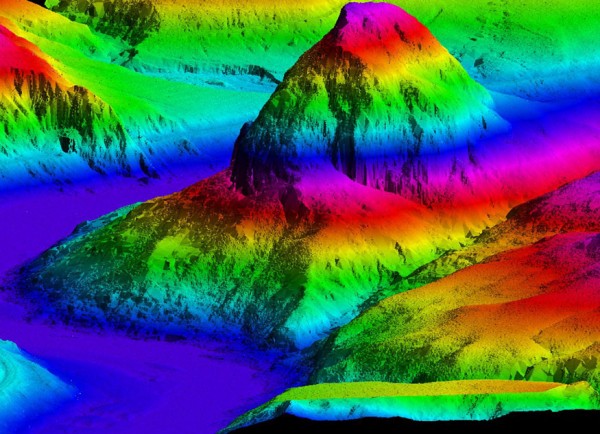
Light Detection and Ranging (LiDAR) is an optical remote-sensing technology that emits multiple pulses of light (laser) and measures the length of time each pulse takes to return to the sensor. This process generates a “point cloud” of highly accurate x,y,z measurements reflected from natural and man-made features such as bare earth, vegetation, roadways, and buildings. Towill, Inc. has been innovative in our ability to seamlessly integrate point cloud datasets from multiple LiDAR sensors such as airborne LiDAR systems, stationary scanning systems, and vehicle based or “mobile mapping” scanning systems. Applications include engineering design level topographic mapping, terrain modeling for floodplain management, electrical transmission utility as-builts, urban forestry, and many others. LiDAR technology, when well matched with project objectives, offers many benefits over traditional survey and mapping procedures, including reduced cost, higher detail, and compressed schedules.

Airborne LiDAR data, whether used alone or in combination with photogrammetry and/or 3D scanning, provides an incredibly detailed data model in a short amount of time and at lower cost than traditional methods for large projects.
Technologies to Move Our Clients Forward

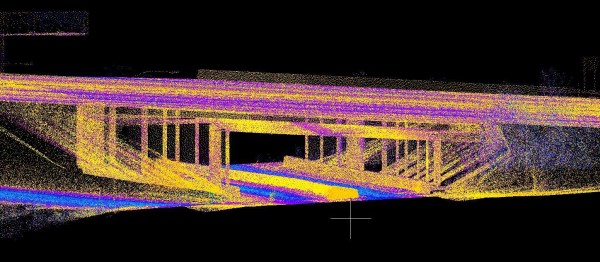
Towill provides our clients advanced terrestrial 3D laser scanning services with an emphasis on the highest standard in quality of project data and deliverables. Towill’s 3D scanning services include data collection for Building Information Modeling (BIM) implementation; deformation studies; industrial metrology; in-situ assessment of tunnels, roads, bridges and other infrastructure; pre- and post-condition surveys for heavy civil construction projects to mitigate owner risk; and related services.

Towill’s terrestrial laser scanning services are supplemented by our mobile and aerial LiDAR capabilities. Many miles of highway, roads, and railroads can be modeled in a short period of time through a combination of these three services. All of the data can be registered together, allowing a point cloud to be provided in one common project datum.

The Analytical Side of Geomatics

Towill’s team of Geospatial Solutions professionals transform raw geospatial data into actionable information, helping our clients visualize their assets and understand the people, places, and things that matter to their business. Our Geospatial Solutions practice is built on the superior geomatics expertise cultivated at Towill since 1955. Our technologists pick up where our surveying and mapping professionals leave off to build complete solutions, purpose-built and integrated within your enterprise. We partner with industry-leading technology companies, combining best-in-class commercial software with powerful analytics to depict the geography in your business data.

Towill offers a wide range of geospatial implementation services including consulting, data acquisition, systems integration, and end-user solutions tailored to the operational needs of businesses and governments worldwide. Whether your assets are above or below ground, indoors or out, we can help. We’ll work with you to understand your needs and explore whether desktop productivity, hosted or on-premise web services, mobile applications, integrated asset management systems, indoor positioning, or any other geospatial solution will solve your problem.

We Take Our Clients to New Heights

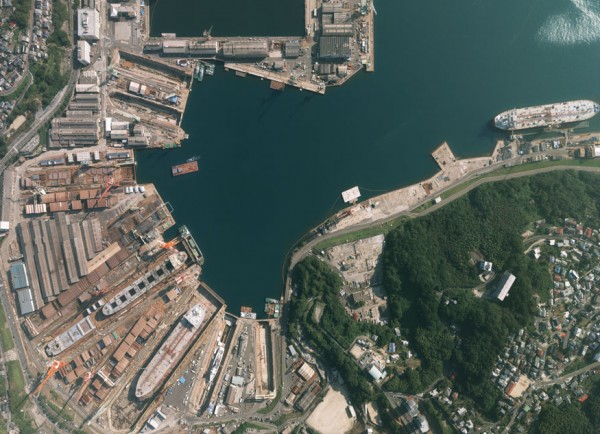
Towill performs more than 100 aerial photogrammetric mapping projects each year, ranging from large-scale (1:200 or 1:500) mapping used for engineering design projects to small-scale mapping (1:2,500 or 1:10,000) for planning, facilities management, and environmental restoration projects. High-quality aerial photography is the foundation for most photogrammetric maps, which produce the orthophotos and base maps used in many GIS applications. At altitudes from 500 feet to 30,000 feet, we can create maps to scale using natural-color, black-and-white, and color-infrared photography precisely georeferenced with GPS and inertial measurement technologies. Based on Towill’s years of experience delivering large-scale and small-scale maps, we have developed feature compilation (data digitizing) techniques that consistently meet or exceed all requirements for detail and accuracy. Over the last 20 years, Towill has used softcopy photogrammetry workstations to extract planimetric and topographic data from aerial imagery.

Towill’s professional photogrammetrists deliver high-quality topographic and planimetric mapping data woven from multiple airborne cameras and sensors, such as LiDAR (Light Detection and Ranging). We use efficient 2D and 3D geometric construction techniques to compile planimetric map features. Topographic data digitizing techniques are designed to ensure that breaklines and spot elevations (including mass points) are collected at appropriate densities for any particular map scale and contour interval combination. We use techniques that allow us to collect terrain data cost-effectively, since we only compile points necessary to accurately model the terrain.

Leaving Our Mark On History

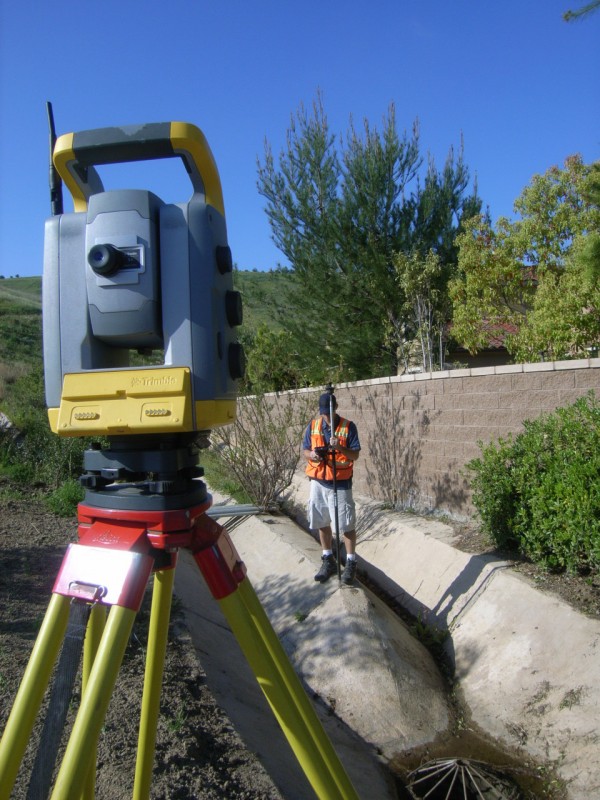
Towill’s goal is to leave our mark on the industry through innovative and quality service. Our survey team is comprised of industry leaders who can offer our clients expertise in large scale geodetic control, industrial metrology, automated subsidence monitoring, utility, boundary and right of way engineering, detailed topographic and construction layout surveys. Our licensed surveyors are capable of supporting any type of project including heavy construction, bridges, tunnels, highways and railways, dams, energy and water storage, transmission and distribution, plant and processing facilities, and environmental mapping and remediation.

Towill’s commitment to being an industry leader begins with our continuous investment in new technologies that give our clients the most accurate, cost-efficient, and timely services available. We also carefully choose our staff to make sure each has received formal training so they know how to properly use advanced technologies for collecting data, preparing maps, and performing calculations. We know that quality people are our greatest asset and we encourage innovative, progressive thinking as a path to better solutions.